 How-to
How to Attract Dental Implant Patients
Last Updated: November 22, 2026
Quick Summary
To attract dental implant patients, build a tracked acquisition funnel that maps every stage from first search to signed treatment plan, then fix the stage with the biggest drop-off. Combine local SEO, targeted Google Ads, patient education content, and strong reviews to fill your consultation calendar.
- Tag every inquiry with its source at first contact so you do not misallocate budget.
- Send paid search clicks to a dedicated implant page, never your homepage.
- Improving case acceptance is often cheaper than buying more leads.
- Ask every satisfied implant patient for a review at their follow-up visit.
- Get signed consent before using any patient photo or testimonial.
Table of Contents
- How to attract dental implant patients
- Build a measurable implant patient acquisition funnel
- Dental implant marketing strategies that fill your consultation calendar
- Dental implant patient education that builds trust before the first visit
- Dental implant case acceptance: turning consultations into treatment
- The dental implant consultation: a quiet setting and a clear plan
- Online reviews, reputation management, and social media for implant patients
- Ethical advertising, consent, and patient privacy in implant marketing
- Frequently Asked Questions
How to attract dental implant patients
Learning how to attract dental implant patients starts with one shift in thinking: you are not chasing new patients, you are earning the trust of people who are already researching. Most of those people begin online, reading reviews and comparing practices long before they call. Dentists who want that research phase to end at their door are the ones this approach is built for.
Here is the uncomfortable part most guides skip. Implant patients are not browsing for a cleaning. They are weighing a significant decision, often with real anxiety about cost, pain, and whether the treatment will last. Your marketing has to answer those fears, not just announce that you offer implants.
Below, we break down the full path from first search to signed treatment plan. It is a system, not a list of tricks.
Build a measurable implant patient acquisition funnel
An implant patient acquisition funnel is the tracked path a prospective patient follows from first finding your practice to accepting a treatment plan. Without it, you are guessing which marketing works and where patients disappear.
Map every stage from first search to signed treatment plan
Write the stages down and assign a single owner for each. Most practices skip this and then wonder why leads go cold.
- Discovery: the patient searches "dental implants near me," asks a friend, or sees a post
- Research: they read your pages, reviews, and before-and-after images
- Contact: they call, message, or book a consultation
- Consultation: they meet you in a quiet setting and hear the plan
- Decision: they accept, delay, or decline
- Treatment completion: they start and finish the case
Each stage leaks patients. Your job is to find where and why. A common pattern is heavy spending at Discovery while the real leak sits at Contact or Decision.
Track the numbers that predict revenue
You do not need complex software. A simple weekly sheet works, but track channel-level detail, not just totals.
| Metric | What it tells you | Where to find it |
|---|---|---|
| Consultation bookings by source | Demand and channel performance | Front desk log or CRM |
| Show-up rate | How well you confirm and remind | Appointment records |
| Case acceptance rate | How well your presentation converts | Treatment plan sign-offs |
| Cost per booking by channel | Whether ads are paying off | Ad platform reports plus manual source tagging |
| Cost per accepted case | True acquisition cost | Combine ad spend with signed plans |
| Source of each patient | Which channel deserves more budget | Ask at booking and record it |
Track these for a month before changing anything. The pattern usually surprises practice owners.
Connect channels to cost per lead and return on investment
General marketing advice rarely tells you what a lead costs. You can calculate it yourself without inventing numbers.
- For paid search, divide monthly ad spend by the number of implant consultation bookings attributed to those ads. That is your cost per booking.
- For organic search and local SEO, estimate the hours and content cost per month, then divide by organic bookings. The figure is often lower than paid search over time but slower to build.
- For referrals, the cost is mostly relationship time and follow-up materials. Track how many referred patients book and accept.
- For social media, separate education posts from promotional posts and see which drives bookings.
A common pattern is that paid search produces the most leads but the highest cost per accepted case, while referrals produce fewer leads but higher acceptance. The only way to know is to tag every inquiry with its source and review the numbers monthly.
Watch out: if you do not tag the source at the first contact, you will credit the last channel the patient mentions and misallocate budget for months.
Find and fix the biggest drop-off
Once you have a month of data, calculate the conversion rate between each stage. The stage with the lowest conversion relative to its volume is your priority.
- If Discovery to Contact is weak, your website, reviews, or landing page is the problem.
- If Contact to Consultation is weak, your front desk script, reminder system, or online booking is the problem.
- If Consultation to Decision is weak, your presentation, financing clarity, or follow-up is the problem.
Fix one stage at a time and measure again. This is the difference between a marketing budget and a measurable acquisition system.
Dental implant marketing strategies that fill your consultation calendar
Effective dental implant marketing strategies combine local visibility, paid search, and content that answers real questions. No single channel carries the whole load.
Local SEO and Google Business Profile for implant searches
Your Google Business Profile is often the first thing a patient sees. Treat it like a storefront.
- List implant services clearly in your description
- Add real photos of your team and rooms
- Respond to every review, good or bad
- Keep hours and contact details accurate
- Post updates about implant education, not just promotions
The American Academy of Cosmetic Dentistry's marketing guidance continues to point to relevant content, strong local presence, reviews, and a fast mobile site as the fundamentals. If you want help building that visibility, our SEO expertise service covers how search authority gets built for dental practices.
Google Ads and targeted advertising with cost controls
Paid search puts you in front of people actively looking. It also burns money fast if you let it.
Set a daily cap. Target implant-specific terms, not broad "dentist" keywords. Send clicks to a dedicated implant page, never your homepage. Check cost per booking weekly, not monthly.
Watch out: running ads to a slow or confusing landing page wastes most of your budget. Fix the page before you scale spend.
Dental implant patient education that builds trust before the first visit
Dental implant patient education is the content that answers a nervous patient's questions before they ever sit in your chair. It is the single most underused tool in most practices.
Content formats that answer real patient questions
Patients want plain answers. Give them in several formats:
- Short articles on cost, healing time, and candidacy
- Short videos of you explaining common concerns
- Before-and-after image galleries with consent
- Comparison pages for implant vs. bridge vs. denture
A study on patient perceptions and expectations of dental implants found that patients arrive with strong preconceptions about the procedure. Meeting those expectations early builds patient trust before the consultation even starts.
This is exactly where Byline Engine fits. You speak your clinical knowledge out loud, and it becomes SEO-optimized articles that carry your voice. No blank page, no agency template. If you want a bespoke content plan, our content strategy service shows how it works. For a model of trustworthy implant education, see this guide to implant benefits, costs, and myths.
Dental implant case acceptance: turning consultations into treatment
Dental implant case acceptance is the share of implant consultations that end in a signed treatment plan. Improving it is often cheaper than buying more leads, because you are converting demand you already paid to generate.
Presentation structure and honest communication
Walk patients through the plan in a fixed order so nothing important is skipped:
- Restate their goal in their own words
- Show the diagnosis in plain language
- Present the recommended option first
- Show alternatives and their trade-offs
- Give the cost clearly, with no surprises
- Explain what happens next, including recovery and follow-up
Honest communication wins here. If a patient is not a good candidate, say so and explain why. They will refer others because you told them the truth, and you avoid a failed case that damages your reputation.
Reducing barriers for anxious or clinically uncertain patients
Cost is the biggest blocker, but fear and uncertainty are close behind. Address both in the consultation itself.
- Offer clear financing options and payment plans, and put them in writing so patients can review at home.
- Explain affordability without pressure, and be transparent about what is included.
- For anxious patients, slow the pace. Use a quiet room, an unhurried conversation, and a written summary of what happens next.
- Discuss candidacy honestly, including alternatives such as bridges or dentures, so the patient feels informed rather than sold to.
- Describe recovery expectations in plain terms so the unknown feels manageable.
Patient motivation rises when the path feels clear and the risks are acknowledged. A patient who feels rushed or confused will delay, and delay usually means decline.
Ethical advertising, consent, and follow-up
Case acceptance depends on trust, and trust depends on how you handle patient stories and images. Get signed consent before using any photo or testimonial, anonymize where needed, and never guarantee outcomes. Practices that cut corners here risk complaints and lost trust, which costs far more than the marketing ever earned.
For patients who do not decide on the day, have a structured follow-up. A short call or message within a week to answer questions and confirm financing options keeps the conversation alive without pressure. Tracking how many delayed decisions convert after follow-up shows whether the effort is paying off.
The dental implant consultation: a quiet setting and a clear plan
A quiet consultation setting and a written plan are two of the strongest conversion tools you have. The environment does as much work as the words.
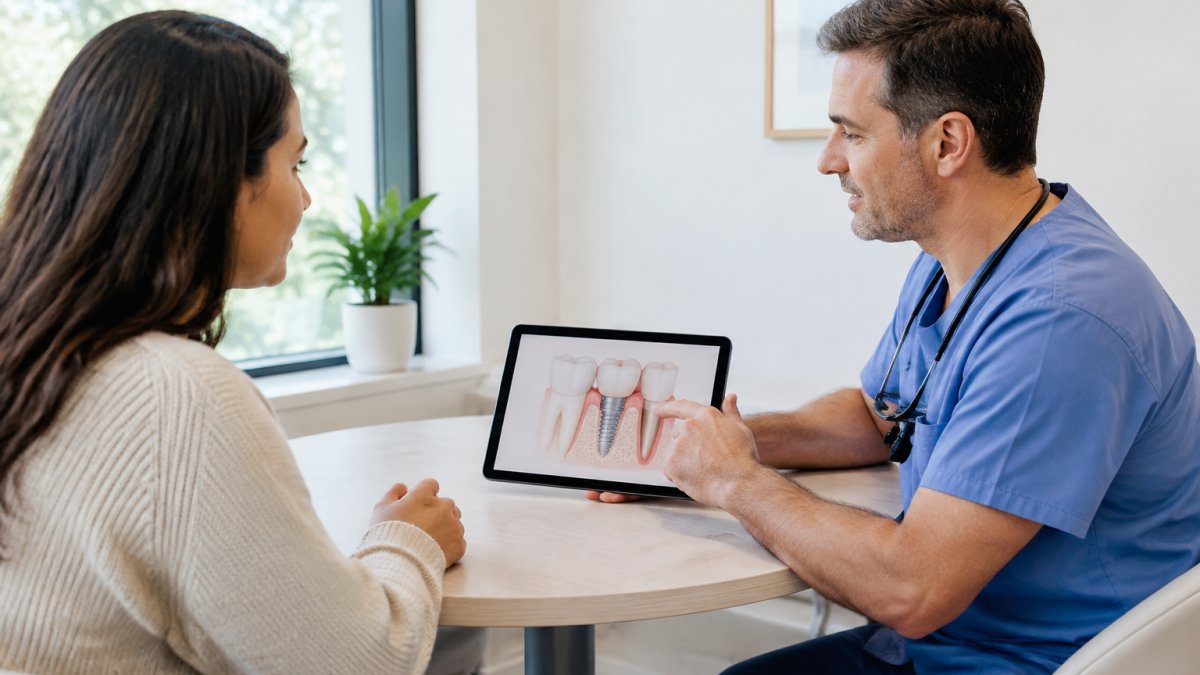
Skip the operatory for the first conversation. Use a private room with soft lighting and no drill sounds nearby. Hand the patient a one-page summary they can take home. Small details like these separate a premium experience from a rushed one.
Online reviews, reputation management, and social media for implant patients
Online reviews and reputation management do more for implant patient acquisition than most paid campaigns. Prospective patients read reviews before they read your website.
Ask every satisfied implant patient for a review at their follow-up visit. Reply to all reviews within a week. On social media, post patient education clips and team photos rather than discount offers. Our social media strategy service covers how to build that presence without sounding like an ad.
Ethical advertising, consent, and patient privacy in implant marketing
Ethical advertising means no guaranteed outcomes, no misleading before-and-after images, and no patient stories without written consent. Patient privacy is not optional.
Get signed consent before using any photo or testimonial. Anonymize where needed. Keep claims honest and verifiable. Practices that cut corners here risk complaints and lost trust, which costs far more than the marketing ever earned.
Attracting implant patients comes down to trust built before the first visit. That trust starts with content that sounds like you, not a template. Byline Engine turns your spoken expertise into SEO-optimized articles that educate prospective patients and position you as the authority in your market. You speak once, and your knowledge works around the clock. Ready to build that asset? Talk to our team about turning your clinical insight into an always-on content library.
Frequently Asked Questions
What marketing channels work well for dental implant practices?
A mix of local search visibility, a professional website with dedicated implant pages, online reviews, and targeted advertising works best. Marketing guidance for dental practices generally names relevant content, local presence, patient reviews, fast load times, and a mobile-friendly site as fundamentals. Social media and educational content support these channels by keeping your practice visible between searches. Track consultation bookings from each channel so you can shift budget toward what actually converts.
How can a dental practice improve implant case acceptance?
Start with a structured dental implant consultation in a quiet setting, use clear language and visual aids to explain the implant treatment plan, and address cost early with financing options. Patient education before the visit, through articles and videos that answer common questions, reduces uncertainty. Follow up after the consultation and document the reasons patients hesitate. Measuring your case acceptance rate by provider and by treatment type shows where the presentation or follow-up process needs work.
How do you promote dental implants without misleading patients?
Keep advertising accurate and avoid promising outcomes. Describe the process, the materials, and the risks in plain terms, and make sure testimonials and before-and-after images have written consent. Follow the advertising rules that apply in your market and protect patient privacy at every step. Honest communication about treatment options, timelines, and costs builds the patient trust that leads to referrals and word-of-mouth, which is more durable than any single promotional offer.
How can a dental practice attract more implant patients from local search?
Claim and complete your Google Business Profile, add implant-specific service pages, and publish content that answers the questions patients type before booking, such as candidacy, costs, and recovery. Encourage reviews from implant patients and respond to them. A fast, mobile-friendly website matters because most local searches happen on a phone. These steps improve search visibility for implant-related queries and make it easier for prospective patients to book a dental implant consultation.
